

Article: Train des Pignes
Train des Pignes
|
The French Chore Coat was originally created for the demands of the Industrial Revolution. This was a period of time that us Australians would refer to as ‘Hard Yakka’ (Hard Work). Often workers would be seen with coal on their faces, sweat on their backs and scratches on their knees. These abrasions were worn with a sense of pride. The coat was worn by French Labourers, Farmers and Engineers, its multiple pockets and durable materials served workers from all industries.
 However, the world is a very different place in 2026... the rapid changes in technology mean that many people now work from home, a cafe, or behind a desk.
Hence, our main curiosity is to explore the value of a French Chore Coat in this new climate.
To get a well-rounded view, we thought it was wise to travel to the coats' roots. In our minds, French labour = French railways.
We googled and googled until we found an old country town with a preserved train line. The Train des Pignes, one of the last running steam locomotives in France. We packed our bags and set off from Australia.
35 hours of travel later, we arrived in a beautiful, quaint castle town called Entrevaux. This town sits in the Lower Var Gorges of the Train Des Pignes, a perfectly preserved medieval fortified village that can only be entered via drawbridge over the Var river.
I smirk writing this as we are summarising hours and hours of travel in a few casual sentences. We do have a YouTube video coming out which explores this trip much more intricately. So, if this short piece of writing makes you feel something, keep an eye out for that video.
Anyway, back to the South of France...
 Beautiful.
It was a Saturday when we set off for the train (which is the only day of the week that it runs). Maybe this is because the 100 year old E211 locomotive requires a lot of maintenance. It travels down about one hour to Annot and then returns. We had a short window to find some answers!
The train drivers were unmissable. It was the protective goggles with the ash and sweat all over their faces, and Chore Coats of course.
 A chain dangling around their necks and cigarettes floating from the corner of their mouths, they really completed the arduous coal shovelling with such an effortless nature.
We were even able to have a quick conversation with them (thanks to our French model Louis, who was able to translate)!
We were completely blown away when we were told that these drivers do the job as volunteers! They really do ‘Chores’ for the love and passion of their culture.
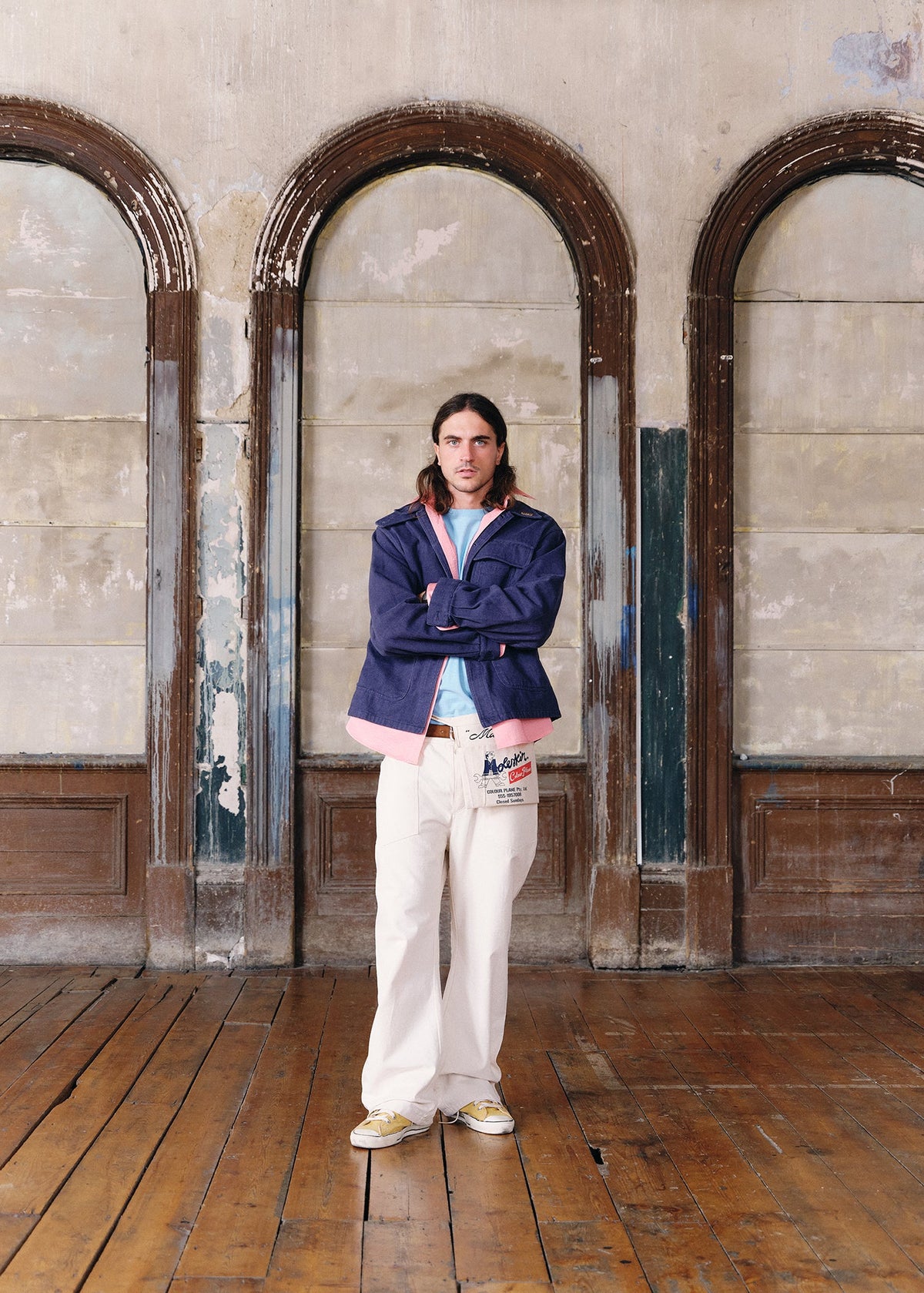
From our experience, the French Chore Coat felt like a symbol of nonchalance and elegance mixed all in one. The coat was worn by those who showed what it meant to be capable of achieving difficult tasks, while doing so with a completely relaxed nature.
Other French traditions that share this wonderful flow:
We feel as if this jacket has come to symbolise the French traditions which seem to combat the modern worlds incessant need to be productive.
It was warming to see French Chore Coats still being worn for their intended purpose by the train crew of the Chemins de Ferry de Provence. Their energy and passion were incredibly infectious. We think it's human nature to admire someone who completes a tough job for their community.
Ultimately, even if the modern wearer of a French Chore Coat rarely requires its original functionality, the jacket has now evolved into an important cultural symbol.
Colour Plane
|